
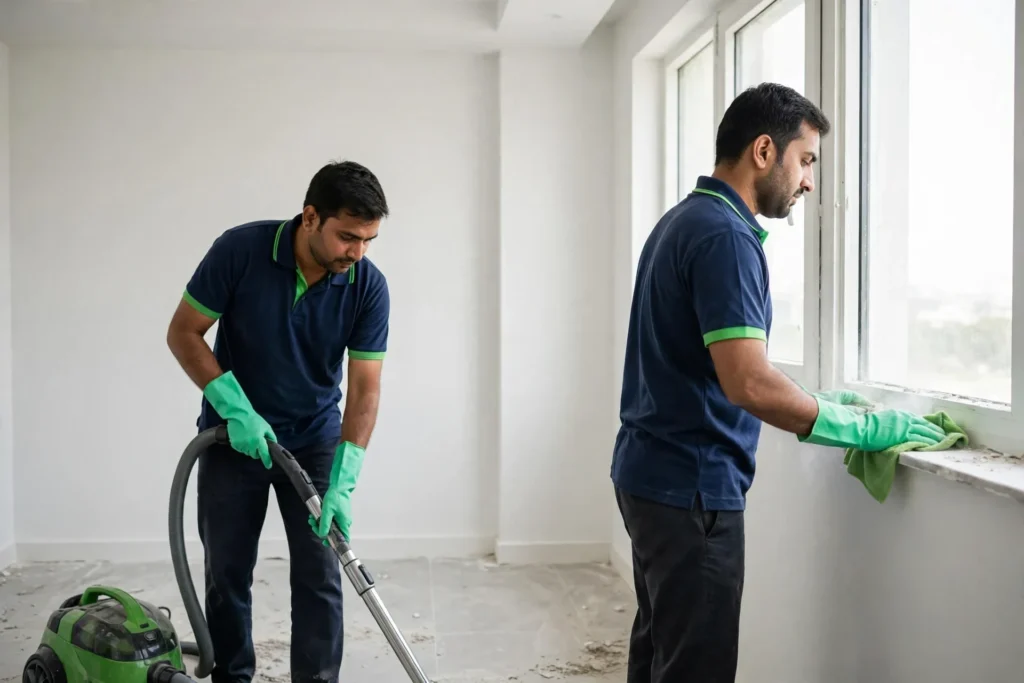
Post-construction cleaning should begin after dust-producing work is genuinely finished. If sanding, drilling, cutting, touch-ups or snagging are still active, fine dust can be recreated immediately after the clean.
Contractor handoff before cleaning
- Complete sanding, drilling, cutting and dusty touch-up work.
- Remove tools, packaging, offcuts and construction debris.
- Identify fresh paint, grout, sealant and other finishes that may need curing time.
- Identify delicate stone, glass, metal, laminate, cabinetry and coated surfaces.
- Confirm water, electricity and safe access.
- Identify adhesive, paint, cement or silicone residues that may require specialist removal rather than ordinary wiping.
Room-by-room checklist
- Cabinet and wardrobe interiors before occupation.
- Tops, faces and edges of built-in joinery.
- Window and door tracks.
- Skirting boards, ledges and accessible vents.
- Switch plates, doors, frames and handles.
- Kitchen and bathroom fixtures after construction residue is assessed.
- Interior glass where included.
- Flooring using a method suitable for the installed material.
Residue is not the same as dust
Paint spots, grout haze, adhesive, silicone, cementitious residue and protective-film adhesive can require different methods. A product or scraper that is safe on one material can scratch, etch, discolor or strip another. Identify the residue and substrate before escalating the method. Newly installed surfaces may also carry manufacturer-specific cleaning instructions.
When cleaning should stop
Stop and escalate when a mark appears to be a scratch, chip, coating failure, etching, uncured finish or construction defect. Cleaning should not be used to disguise damage. The same applies when a residue cannot be identified safely.
For a service designed around renovation and fit-out cleanup, see Post-Construction Cleaning Dubai.
Post-construction cleaning is usually a staged process
Trying to make a dusty site presentation-ready in one undifferentiated pass is inefficient. A practical workflow separates coarse clearance, fine-dust removal, wet/detail cleaning and final inspection. Each stage prevents the next one from being contaminated by work that should already have been completed.
Stage 1: clearance
Remove packaging, offcuts and loose debris. Construction waste disposal itself may be outside a cleaning contract, so define responsibility before the team arrives.
Stage 2: fine-dust capture
Work high to low and use suitable vacuum filtration on compatible surfaces, tracks, joinery and floors. U.S. EPA renovation guidance uses HEPA vacuuming and wet cleaning as core dust-control steps; this is cited for the physical cleaning principle, not as Dubai regulation.
Stage 3: residue and detail work
Treat paint spots, adhesive, grout haze, silicone and cementitious residue according to both the residue and the underlying material. Test conservative methods before escalation.
Stage 4: final inspection
Allow cleaned surfaces to dry, inspect in good light, re-clean remaining removable dust and put construction defects on a separate snagging list.
Material compatibility matters more after renovation
- Glass: abrasive particles and inappropriate blades can scratch or damage coatings.
- Natural stone: acidic products can etch acid-sensitive materials.
- Metal: strong chemicals and abrasives can alter finishes.
- Laminate and cabinetry: excess water can enter joints and edges.
- Fresh paint or sealant: cleaning too early or too aggressively can mark uncured finishes.
How to prevent dust from returning after the final clean
Finish dusty snagging first, keep cleaned zones separated from active work, change or inspect relevant HVAC filters as appropriate, remove protective sheeting carefully, and avoid dry sweeping fine dust back into the air. If dust repeatedly returns, investigate the source instead of repeating the same surface wipe.
Acceptance criteria for a handover clean
Agree what will be inspected: visible dust on representative horizontal surfaces, tracks and joinery; streaking on agreed glass; removable residue; floor condition; and waste left behind. A written acceptance scope is more useful than the vague promise that a site will be “100% spotless.”
Frequently asked questions
Why does construction dust sometimes return after cleaning?
Fine particles can remain on high surfaces, inside tracks and joinery, or be redistributed by unfinished work and air movement. A high-to-low sequence and final reinspection reduce repeat contamination.
Can every construction mark be scraped off?
No. Scraping can damage glass, coatings, stone, laminates and other finishes. The residue and substrate should be identified first.
Should the property be cleaned before snagging is complete?
A preliminary clean may be useful, but the final clean is best scheduled after dust-producing snagging work is finished.
Need Help With This Cleaning Task?
Explore the relevant service page for scope and quote information.