
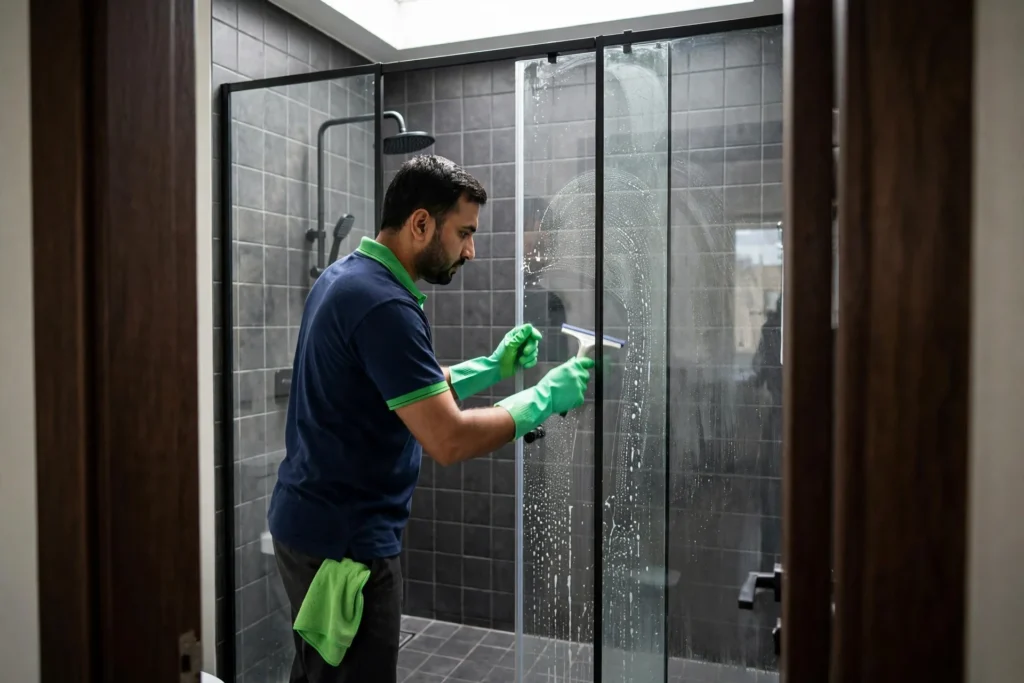
Bathroom deep cleaning should remove removable soil and scale while protecting the finishes underneath. The key is to identify what you are cleaning—glass, ceramic, grout, chrome, natural stone, coated metal or sealant—before choosing a stronger product or abrasive method.
Start with inspection
- Identify scale, soap residue, ordinary soil and discoloration separately.
- Check grout and silicone for cracks, gaps or deterioration.
- Look for loose fittings, leaks or corrosion.
- Identify natural stone or other acid-sensitive surfaces.
- Check manufacturer instructions for coated glass, specialty tapware or other delicate finishes.
Fixtures and sanitary ware
Clean toilets, basins, taps, shower fittings and baths using products compatible with the material. Give cleaning products the contact time stated on their label rather than compensating with aggressive scrubbing. Rinse where required and dry polished surfaces to reduce streaking.
Shower glass and mineral scale
Mineral deposits can require repeated controlled treatment, but stronger is not always better. Acidic descalers can damage acid-sensitive stone, some metals and surrounding materials. Old glass may also have permanent etching or coating damage that resembles removable scale.
Tile, grout and silicone
Grout lines can retain soil because of their texture and porosity, while silicone can become stained or deteriorated. Cleaning may improve removable surface contamination, but failed, cracked or deeply discoloured sealant may need replacement. Avoid promising that every dark grout or silicone mark can be restored by cleaning alone.
Edges and overlooked areas
- Behind and around the toilet where accessible.
- Floor-wall junctions and corners.
- Vanity edges and handles.
- Shower-door tracks.
- Accessible exhaust grilles and ledges.
- Mirror edges and splash zones.
- Drains externally; internal plumbing blockages are not a cleaning task.
When to call for maintenance instead
Leaks, loose fittings, cracked grout, failed silicone, damaged coatings, corroded metal and persistent plumbing odours need investigation beyond cleaning. A clean surface can still be defective.
For professional bathroom cleaning scope, see Bathroom Deep Cleaning Dubai. For the broader distinction between maintenance and deeper work, see deep cleaning vs regular cleaning.
Match the product to the deposit and the surface
Soap residue, mineral scale, body soil and rust-like discoloration are different problems. Before using a stronger product, identify both the deposit and the substrate. Acidic descalers can be effective on compatible mineral deposits but can damage natural stone and some metal finishes; abrasives can scratch glass, acrylic and coatings.
Ventilation and product contact time matter
Follow the cleaning product’s label for ventilation, dilution, contact time, rinsing and protective measures. More product or longer exposure is not automatically better. Never mix cleaning chemicals, particularly products containing bleach with acids or ammonia-containing products.
Grout: soil, staining or deterioration?
Textured grout can hold removable soil, but colour variation can also come from wear, previous products, mineral deposits or material deterioration. Repeated aggressive scrubbing can damage weak grout. If grout is cracked, loose or missing, repair is more appropriate than stronger cleaning.
Silicone and sealant have a service life
Surface cleaning can improve removable residue on sound sealant. It cannot restore silicone that is detached, cracked, deeply discoloured or physically degraded. Re-sealing may be required after the underlying area is appropriately prepared and dried.
Bathroom cleaning sequence by zone
- Remove personal items and dry loose debris.
- Clean higher ledges, mirrors and compatible fixtures.
- Treat shower/bath deposits with surface-appropriate products.
- Address grout and tracks without damaging adjacent finishes.
- Clean toilet and basin areas with appropriate tools/products.
- Finish floors and lower edges.
- Rinse/dry as required, ventilate and inspect after surfaces dry.
Problems that should be reported, not scrubbed
- Active leaks or persistent standing water.
- Loose tiles or fittings.
- Cracked or missing grout.
- Failed sealant.
- Corroded fixtures.
- Damaged coatings or etched glass.
- Persistent drain or plumbing odours.
Frequently asked questions
Can I use the same descaler on every bathroom surface?
No. Product compatibility depends on the surface. Natural stone, coated metals and specialty finishes can be damaged by products that are acceptable on ceramic or ordinary glass.
Can cleaning repair failed silicone?
No. Cleaning can remove surface soil, but physically failed or deteriorated sealant needs replacement.
Why does a mark remain after descaling?
It may be permanent etching, coating damage or staining rather than removable mineral deposit. More aggressive cleaning can make damage worse.
Need Help With This Cleaning Task?
Explore the relevant service page for scope and quote information.